
Penalties
A penalty withdraws specific abilities from one member until a given moment. It's the middle setting between leaving someone alone and disabling them altogether: the member keeps their account and their history, and loses only what the penalty names, only until it expires.
Penalties live on the member's Penalties tab. Reading the tab needs permission to read members; adding a penalty needs permission to change them.
What a penalty is made of
Add penalty takes three things:
Summary — what the penalty is for. This is what you and your colleagues will read later.
Expires — the moment the restrictions lapse. Required; a penalty always has an end.
Restrictions — one or more of the seven scopes below.
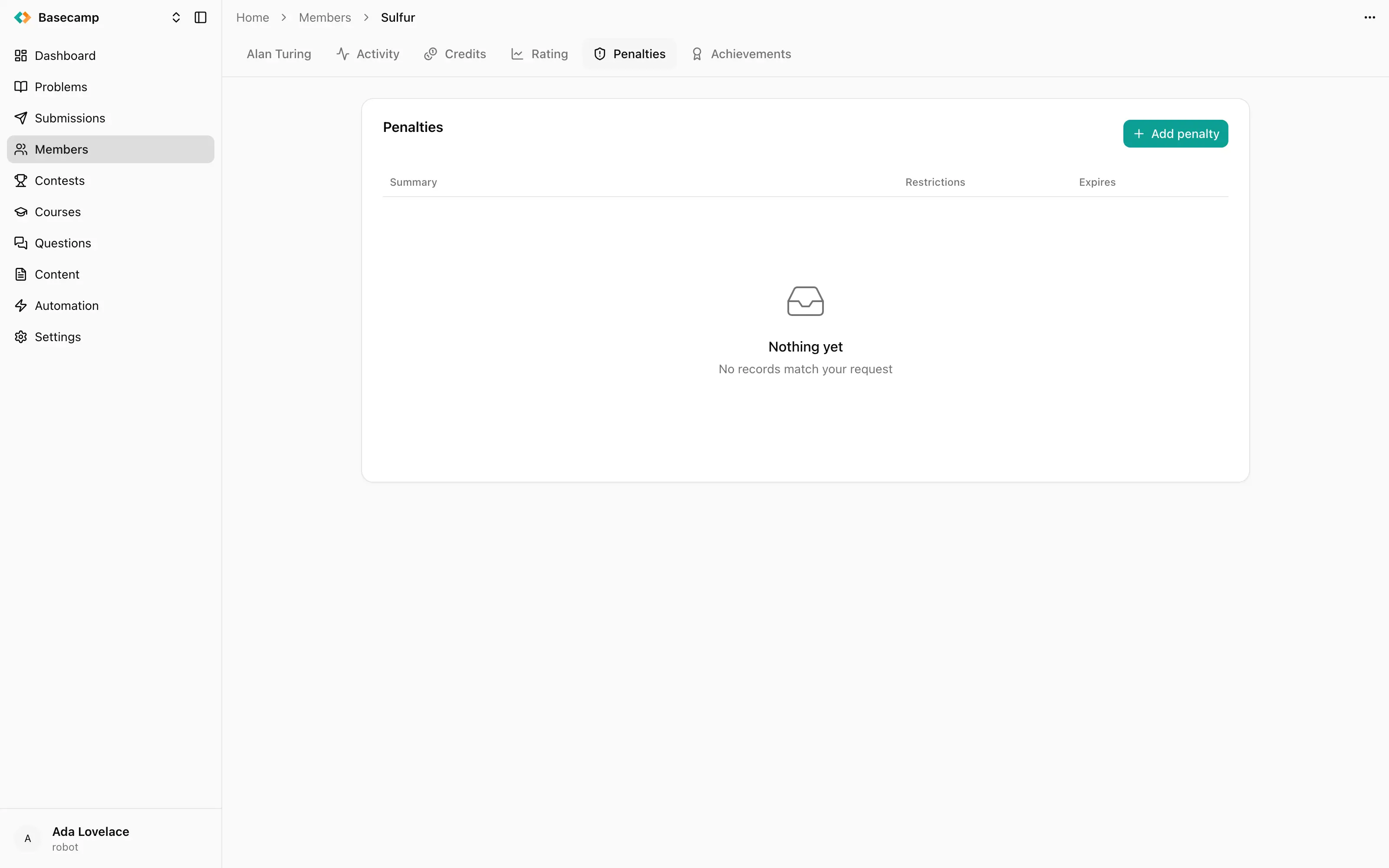
Fig 1. Adding a penalty: a summary, an expiry date, and the restrictions to apply.
The seven restrictions
Each restriction removes exactly what it names and nothing else. They apply across the whole space, not to one contest or one problem.
Restriction | What the member cannot do |
|---|---|
Sign in | Sign in to the space at all. No login link can be issued for them either, so there's no way to let them in while the penalty holds. |
Comments | Create or edit comments, and create or edit posts. |
Votes | Vote on posts or on comments. |
Questions | Open a question or reply to one. During a contest this closes their only route to the jury. |
Suggestions | Submit content suggestions on problems — the corrections and typo reports participants send to problem authors. |
Submissions | Submit solutions, anywhere in the space: not in a contest, not in a course, not while practising. |
Disqualified | Take part officially. Every contest the member joins while this is in force registers them as unofficial, so they're left out of the official rankings. |
Disqualified is different in kind from the other six: it doesn't stop the member doing anything, it changes how they're registered. It applies as each participant record is created, so it governs contests joined while the penalty is in force. It's the same unofficial flag you can set on the member directly — see Disable, restrict and remove a member.
Penalties add up
Penalties don't replace one another. Several can be in force on the same member at once, and their restrictions combine. Restricting two things that should end on different dates means two penalties, not one with the later date.
A penalty can't be edited or lifted early
There's no activation step: a saved penalty is in force from the moment you save it, and it lapses on its own when the expiry passes. The console offers no way to edit a penalty or end one ahead of its date, so choose the date deliberately — once saved, it runs to the date you wrote. Where you're unsure, a short penalty you can follow with another is safer than a long one.
The tab is a history, not a status
The table lists everything ever recorded against the member — summary, restrictions and expiry — including penalties that have already lapsed. It reads as a disciplinary record rather than a view of what applies right now, so to answer "what is this member currently blocked from?" you read the expiry dates.
What the member is told
A penalty carries a rich-text description that the restricted member is shown as the reason. The console form does not currently capture it, so a penalty added from the console reaches the member without an explanation. If the reason matters — and for anything that stops someone competing it usually does — tell them separately.
What penalties are not
Restrictions are separate from the effects of an unverified email address, which withholds a similar set of abilities — submitting, commenting, voting, publishing posts, asking questions — until the address is confirmed. A member who can't submit and has no penalty on file may simply not have verified their email; see Identity providers.
They're also separate from disabling. Disabling revokes access entirely and is reversed with one click; a penalty is narrow, dated and can't be lifted. And they're separate from a contest violation, which belongs to one contest rather than to the member's record in the space.
 Ukrayna ilə durun